What AI search optimization means
AI search optimization is the practice of improving how clearly a website communicates its subject, evidence, and expertise to systems that retrieve information and generate answers. It overlaps with technical SEO, content design, and brand consistency. It is not a separate switch that makes a brand appear in every answer.
For an agency, the useful deliverable is a set of observable problems, recommended changes, and a repeatable way to check what happened afterward. Start with the client’s real buying questions rather than a list of trendy acronyms.
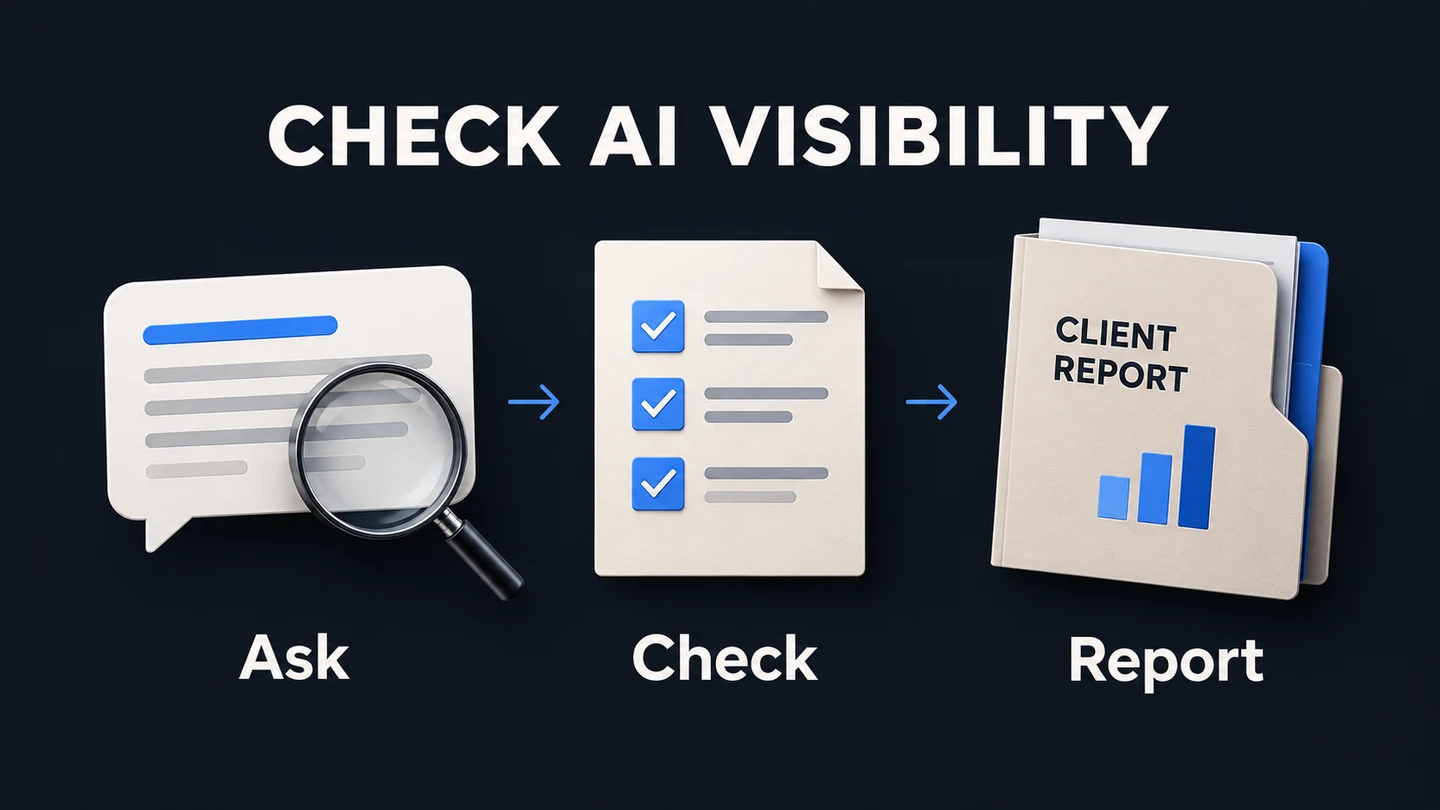
THE WORKING SEQUENCE
- 01Define the query set
- 02Record the evidence
- 03Prioritize the work
Build a page that can stand on its own
Give each important service or product a dedicated page with a clear purpose. State who it is for, what it includes, its limitations, and how a buyer takes the next step. Explain specialist terms on first use. Replace claims such as “best-in-class” with specific capabilities, examples, and evidence.
Use descriptive headings and keep the essential information in readable HTML. A chart or screenshot can clarify an explanation, but it should not be the only place where a key fact appears. Add useful alternative text and a caption when an image needs context.
Check access before rewriting everything
Verify the page returns a successful status, is internally linked, and has an intentional canonical URL. Review indexing directives, robots rules, and any firewall challenge that might prevent a legitimate crawler from reaching it. A page that works in your browser may still be blocked elsewhere.
Google’s AI-feature guidance connects eligibility with existing search fundamentals. Treat crawler access as a necessary technical check, not proof that a system will cite the page.
Create an evidence log
Record the question, search experience, date, response, and cited URLs. Keep the query wording consistent between rounds. Separate a brand mention from a citation to the brand’s own site. Track which answers help a buyer and where the information is incomplete.
Prioritize fixes by impact, confidence, and effort. A broken product page is usually a clearer action than a speculative rewrite based on one missing citation. Recheck after changes have had time to be discovered, and document uncertainty alongside results.
Sources & further reading
Provider guidance was checked for this edition. Our implementation recommendations are editorial guidance, not promises of provider outcomes.
Put the method to work. Explore the AEO / GEO audit system in the Stems Agency Vault.